CarbonSync Overview
Get familiar with CarbonSync and all of the basic concepts
Written By keerthana chandrashekar
Last updated About 1 year ago
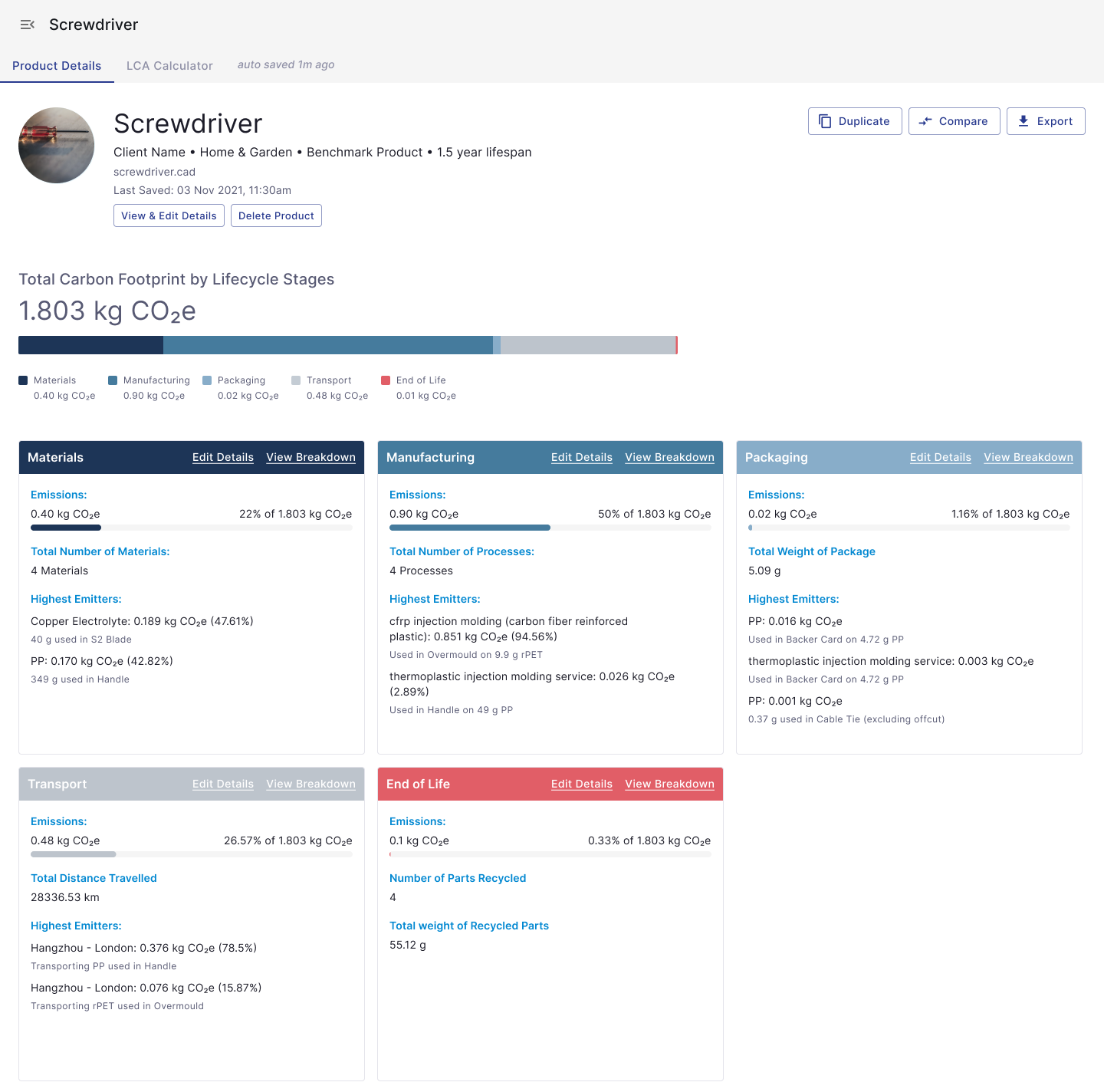
This guide will cover all the basics to ensure you get the most out of CarbonSync.
What is CarbonSync?
CarbonSync is an AI-powered design tool for designing low-carbon products from the start - before costly mistakes get locked in.
We integrate seamlessly into your existing industrial design workflow, helping teams assess and reduce environmental impact during product development.
With CarbonSync, design teams can make smarter and faster material and design choices. By bringing sustainability into the design phase of product development, we help teams avoid costly rework, ensure compliance, and accelerate progress toward climate goals.
What can I use CarbonSync for?
1. Measure the Carbon Footprint of your Products
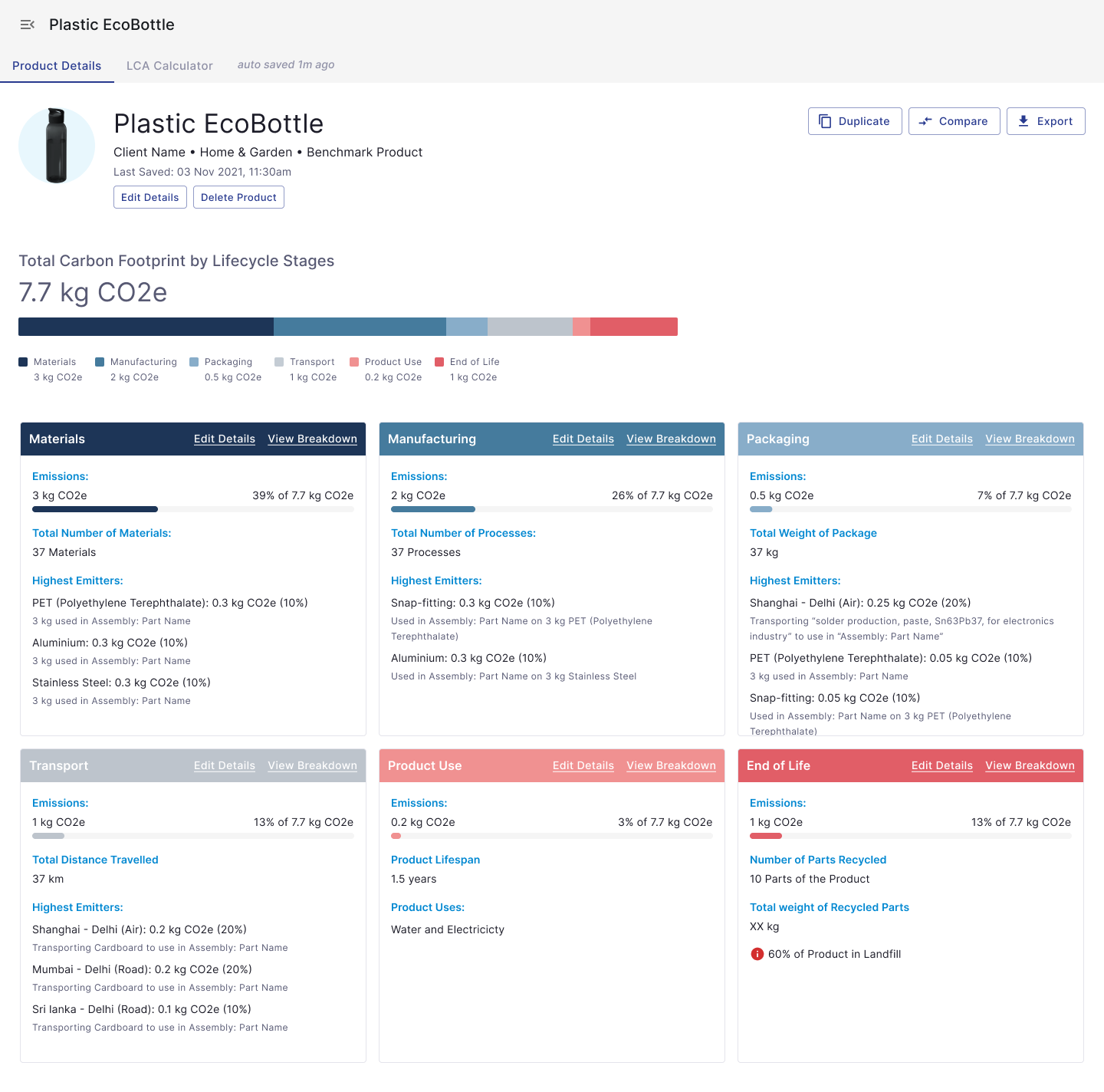
CarbonSync helps industrial design teams build sustainable products - from the start.
Teams can upload their CAD .step files and instantly measure the carbon footprint of their products and its breakdown by lifecycle stages.
2. Get AI-Powered Material Recommendations
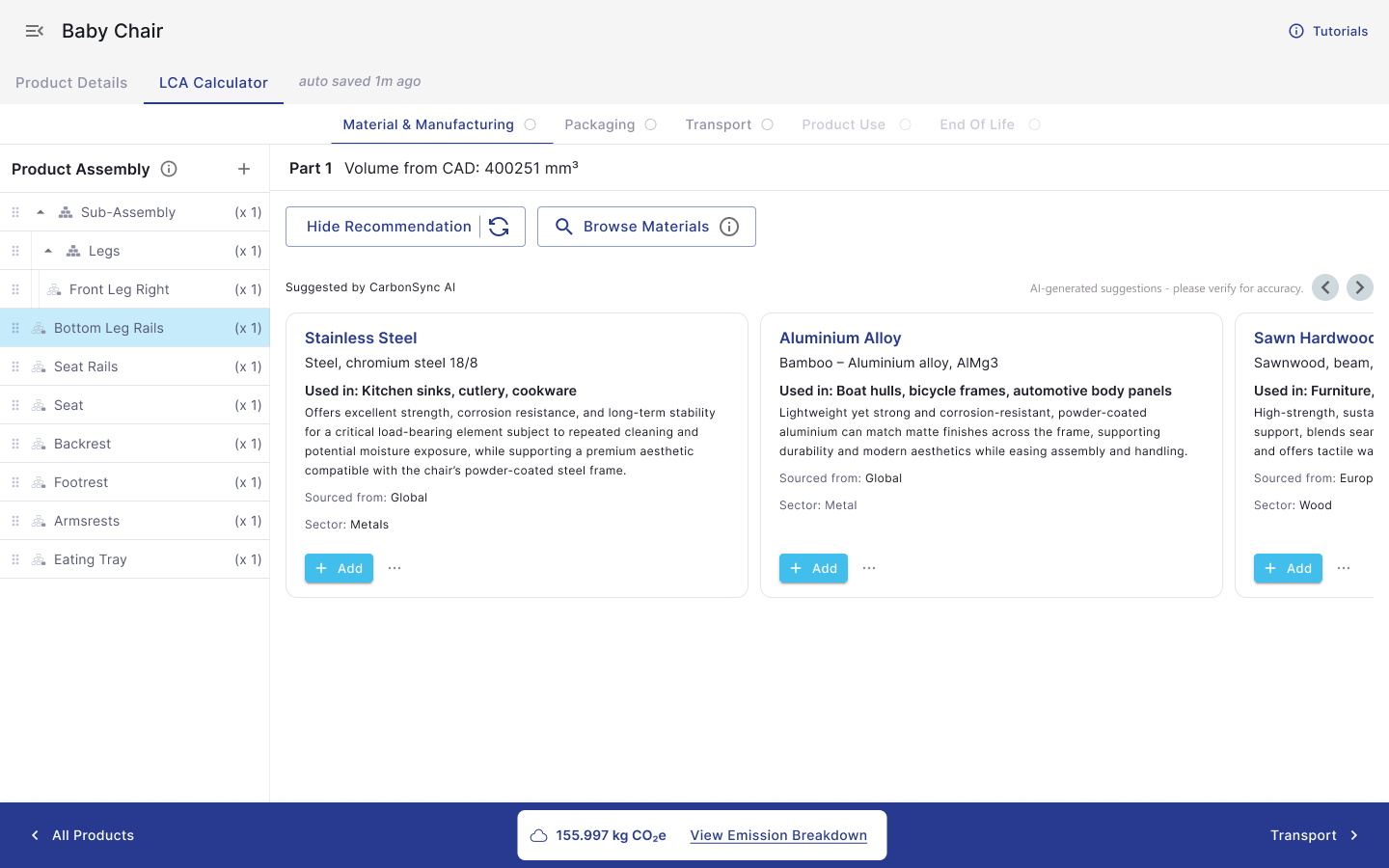
Based on the product brief, technical requirements, and sustainability goals, our AI recommends up to 3 materials for each part in the product assembly.
This allows designers teams to save countless hours spent on materials research.
3. Compare Different Designs for Carbon Efficiency
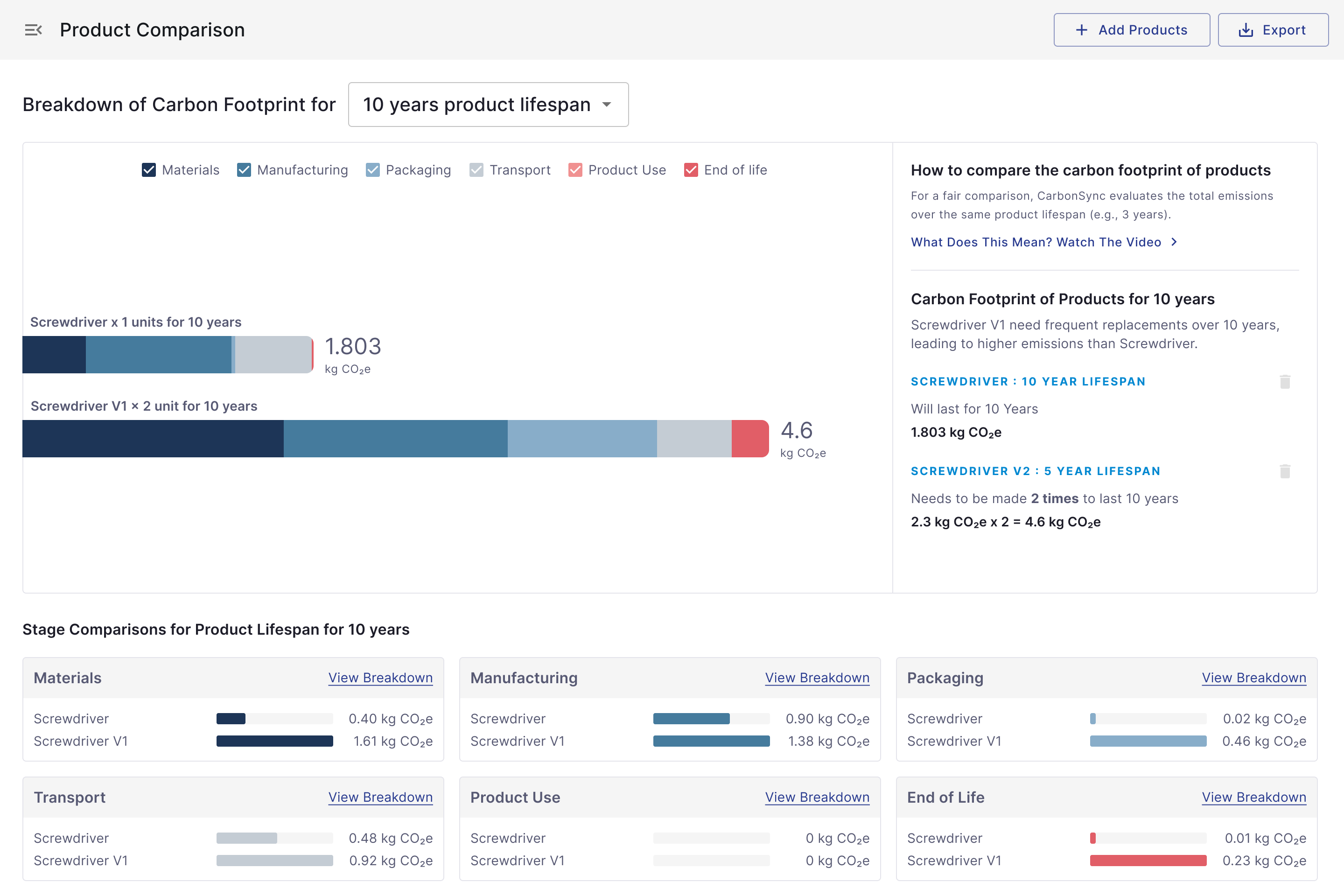
Design teams often explore multiple options before finalizing a product. CarbonSync makes it easy to compare the carbon footprint of different designs—so teams can quickly identify the most sustainable option without slowing down the creative process.
You can also compare how each product version performs over time, whether it’s after 1 year, 5 years, or 10 years of use. This helps teams design for the full product lifecycle, not just for the moment of sale.
By making carbon impact visible early, teams can confidently balance performance, cost, and sustainability—ensuring better design decisions from the start.
4. Model Distribution Routes Based on Carbon Emissions
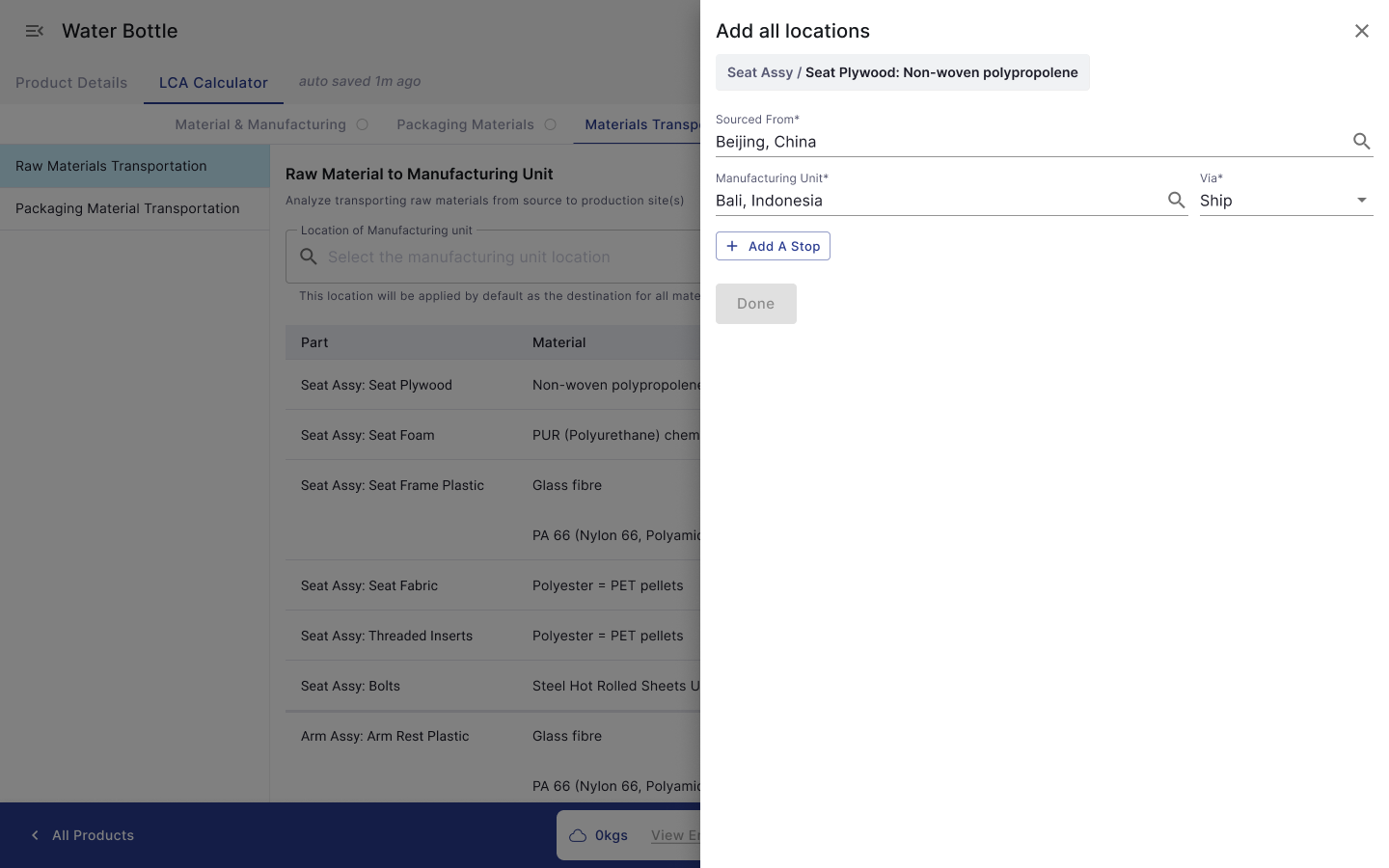
Carbon impact doesn’t stop at the factory—it also comes from how your product is shipped. CarbonSync helps design teams model different distribution routes and understand the emissions from transportation.
You can compare the carbon footprint of shipping your product by air, sea, or road, and across different regions or markets. This gives teams the insights they need to design products—and distribution strategies—that lower emissions from the supply chain.
Our future roadmap
We're continuously working to improve CarbonSync. Make sure to ⬆️ upvote the ideas you want to see on our roadmap:
You can also log in any feature requests in our feedback page and we will add it to our roadmap.